Preparing Peptides
This site is for informational purposes only and is not intended as medical advice. The information provided below reflects current research standards for the storage and preparation of peptides as well as recommended doses for reasearch. All research peptides should be used under the direct supervision of a qualified health care professional. It is essential to check all contraindications and potential interactions before beginning any protocol.
Storing Peptides
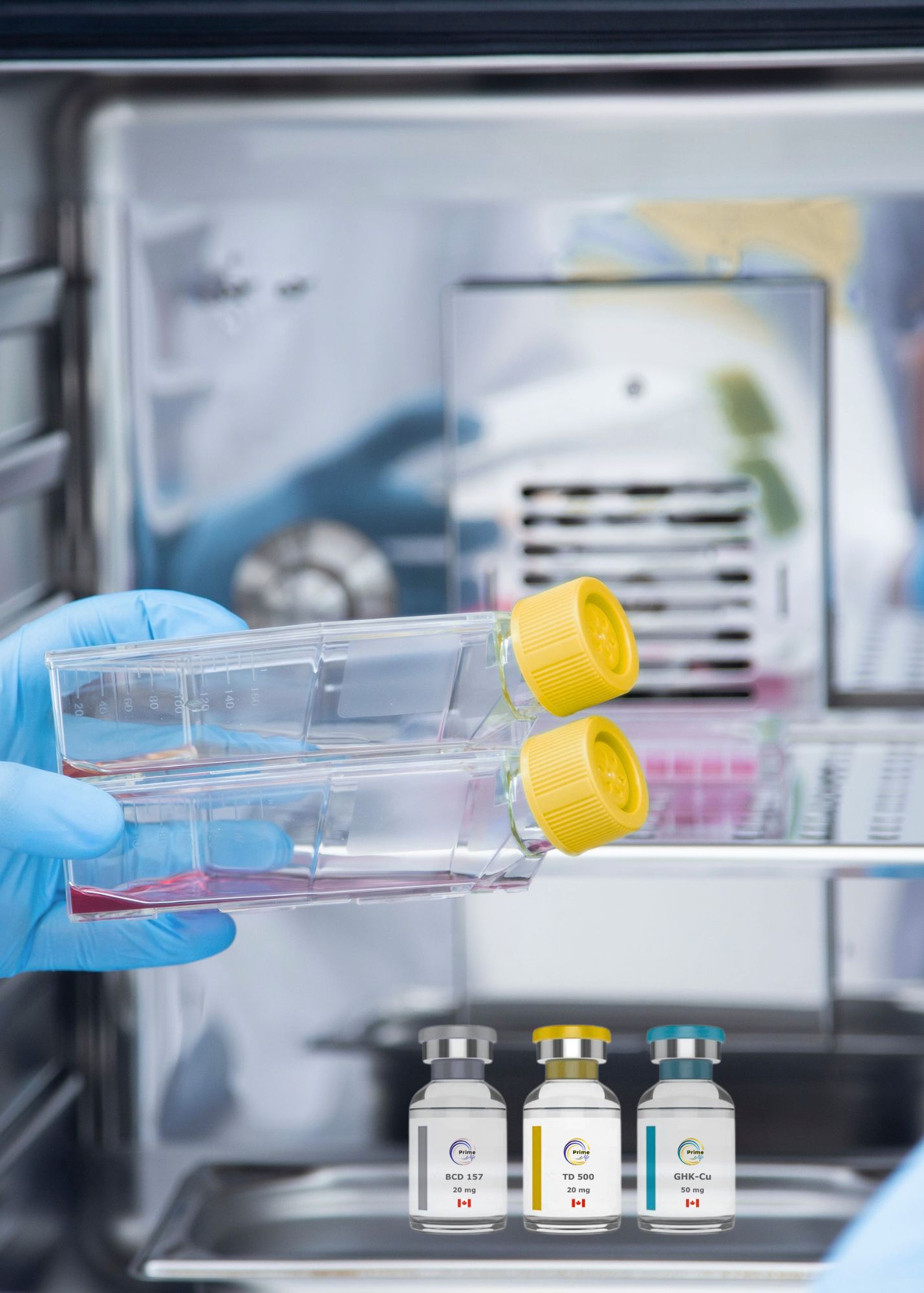
Peptides are delicate compounds that require stable, controlled storage conditions to maintain their potency. Only the vial currently in use should be reconstituted, while remaining vials must be kept in a refrigerator or freezer, depending on how long they will be stored.
Factors such as heat, repeated freeze, thaw cycles, humidity, light exposure, and physical shock all accelerate peptide degradation. To protect both lyophilized and reconstituted peptides, they should be stored in an airtight, light‑blocking container, ideally with desiccant packets to reduce moisture.
Reconstituted peptides generally remain stable in the refrigerator for 60–90 days (shorter for certain peptides like NAD), while lyophilized peptides can last 30–60 days at room temperature, up to a year in the fridge, and 2–3 years in the freezer if protected from moisture and light.
Proper supplies such as alcohol pads, bacteriostatic water or appropriate solvents, and correctly sized syringes are required for safe handling, with optional tools including reconstitution needles and specialized storage containers.
Factors Affecting Peptide Stability
- Higher temperatures accelerate degradation.
- Multiple freeze/thaw cycles rapidly decrease efficacy.
- Humidity causes degradation and crystal formation.
- Light exposure breaks down peptide structure.
- Mechanical shock can cause aggregation and reduce potency.
General Storage Requirements
- Use an opaque, tightly sealed container; wrap in foil if needed.
- Add desiccant packets to reduce moisture exposure.
- Keep in fridge or freezer depending on intended storage duration.
Reconstituted Peptides (Refrigerator Storage)
- Stable for up to 60–90 days (30–45 days for NAD).
- Store in a light‑proof, airtight container.
- Avoid storing in refrigerator door to prevent agitation.
- If aliquoting for long‑term freezing, use a pH 5–6 buffer, not bacteriostatic water, and freeze only once.
Lyophilized Peptide Storage
- Stable 30–60 days at room temperature in a dark, dry cupboard.
- Refrigeration suitable for up to 1 year.
- Freezer storage suitable for 2–3 years if protected from moisture and light.
- Avoid repeated freeze/thaw cycles.
- Optional: specialized storage containers (climate-controlled or standard).
Preparing to Research
Reconstituting peptides requires careful handling to maintain stability and ensure accurate dosing. Begin by using sterile bacteriostatic water or the solvent recommended for the specific peptide.
Gently inject the liquid down the inside wall of the vial to avoid foaming or mechanical shock, allowing the powder to dissolve naturally without vigorous shaking. Once reconstituted, peptides should be stored in a light‑blocking, airtight container in the refrigerator and used within their typical stability window.
The following summaries outline the reconstitution and dosing protocols for various research peptides. Please note that we are not health care professionals, and the information provided is for educational and informational purposes only. Research peptides should always be used under the direct supervision of a qualified health care professional to ensure safety and appropriateness for your specific health profile. It is critical to thoroughly check all potential contraindications, drug interactions, and underlying medical conditions before beginning any new protocol.
Dosing
For dosing, always use clean insulin syringes sized appropriately for small‑unit measurements, follow product‑specific dosing guideliness.
5-AMINO-1MQ: 50MG RECONSTITUTION AND DOSING PROTOCOLS
5-Amino-1MQ is a small molecule compound utilized primarily for fat loss, longevity, and enhancing athletic performance.
- Mechanism: Inhibits the NNMT enzyme, which subsequently boosts NAD⁺ levels in the body.
-
Key Benefits: This process accelerates energy metabolism, reduces fat mass (specifically visceral fat), improves insulin sensitivity, and enhances mitochondrial function and cellular repair.
Suggested Standards
4-6 week cycles followed by a 2-4 week washout period
May be taken any time of day, although morning or afternoon is preferred. 5-AMINO-1MQ does not need to be taken while fasting; GI side effects may be mitigated by dosing along with a light meal
It is recommended to split the daily dose in to two or three injections to maintain a steady level of 5-Amino-1mq in the blood
Subcutaneous Administration
The result is an upregulation of cellular metabolism, reduced fat accumulation, and improved lean body mass.
Recommended Protocol
Mix with 3mL (300 units) of BAC water
Days 1-3: 15 units (2.5mg) once per day, 7 days/week
Days 4-7 + weeks 2-6: 15 units (2.5mg) 2x/day, 7 days per week
Stacking recommendations
CJC-1295 + Ipamorelin – Boosts growth hormone for enhanced metabolic effect
GLP-1 Agonists (Semaglutide, Tirzepatide) – Supports appetite suppression and insulin regulation
Glutathione or NAD+ Precursors – To amplify anti-aging and mitochondrial repair benefits
BPC‑157 is administered subcutaneously or intramuscularly, typically in 8–10 week cycles, followed by a 4–6 week washout.
It is taken 5 days per week with 2 consecutive rest days (or daily for 8‑week cycles).
For injury‑specific treatment, injections may be placed near the injury site or into the abdominal region for systemic absorption.
Reconstitution:
10 mg vial: Mix with 2.5 mL (250 units) BAC water
20 mg vial: Mix with 2.5 mL (250 units) BAC water
Dosing:
10 mg vial:
- Week 1: 6 units (250 mcg), 1–3× daily
- Weeks 2–4: 12 units (500 mcg), 1–3× daily
- Weeks 5–8: 18 units (750 mcg), 1–3× daily
20 mg vial:
- Week 1: 4 units (250 mcg), 1–3× daily
- Weeks 2–4: 6 units (500 mcg), 1–3× daily
- Weeks 5–8: 10 units (750 mcg), 1–3× daily
BPC‑157 + TB‑500 (10 mg Blend)
This blend is taken subcutaneously or intramuscularly in an 8‑week cycle, followed by a 4–8 week washout.
It may be dosed at any time of day and does not require fasting.
Reconstitution:
Mix vial with 2 mL (200 units) of bacteriostatic water.
Dosing:
Standard Protocol:
Weeks 1–2: 6 units (600 mcg) daily
Weeks 3–8: 8 units (800 mcg) daily
Maximum Protocol:
Weeks 1–2: 10 units (1,000 mcg) daily
Weeks 3–8: 6 units (600 mcg) daily
Reconstitute a 5 mg DSIP vial with 2.5 mL (250 units) of bacteriostatic water.
DSIP is administered subcutaneously once daily, taken all 7 days per week, in 8–12 week cycles followed by a 4–8 week washout.
The dose should be taken 30 minutes to 1 hour before bedtime.
Dosing Schedule:
Week 1: 5 units (100 mcg) daily
Week 2: 10 units (200 mcg) daily
Weeks 3–12: Increase by 100 mcg increments as needed to maintain benefits
15 units = 300 mcg
20 units = 400 mcg
25 units = 500 mcg
30 units = 600 mcg
35 units = 700 mcg
Epithalon (10 mg) is a synthetic peptide used in various anti-aging and longevity regimens, typically administered via subcutaneous injection at night. To maintain its effects, users generally repeat their chosen cycle 2–3 times per year. Depending on the desired intensity and frequency of administration, three primary protocols are utilized, ranging from high-frequency daily doses to spaced-out, high-milligram injections.
Core Administration & Dosing
Administration: All protocols require subcutaneous injection (under the skin).
Timing: For optimal results, doses should be administered in the evening.
Ukrainian Protocol (Intermittent): * Mix 10mg with 1mL of BAC water.
Inject the full 10mg (100 units) once every four days (Days 1, 5, 9, 13, and 17).
Standard Protocol (Daily Moderate): * Mix 10mg with 2mL of BAC water.
Inject 5mg (100 units) daily for 20 consecutive days.
Maximum Protocol (Daily High-Dose): * Mix 10mg with 1mL of BAC water.
Inject 10mg (100 units) daily for 10 consecutive days.
Preparation & Storage
Reconstitution: Always use Bacteriostatic (BAC) water to dissolve the lyophilized powder.
Shelf Life: Once mixed, the solution should be kept refrigerated to maintain peptide stability.
GHK-Cu (Copper Peptide) is typically administered via subcutaneous injection on a cyclical basis to maintain its regenerative benefits.
A standard cycle lasts 4–6 weeks, followed by an equal 4–6 week washout period to prevent desensitization. While evening administration is often preferred, the peptide can be taken at any time of day and does not require a fasted state.
The general dosing strategy emphasizes starting at the lowest effective dose and gradually increasing as needed to sustain results.
Administration:
Delivered via subcutaneous injection (under the skin).
Cycle Timing: 4–6 weeks of active use, followed by a 4–6 week break.
Flexibility: Daily dosing is recommended for consistency, though less frequent administration is an option based on preference.
Titration: Always begin at the minimum dose; increase gradually only if necessary to maintain the peptide’s effects.
Reconstitution and Specific Dosage
The volume of Bacteriostatic (BAC) water used depends on the vial size provided, affecting the concentration and resulting “unit” measurement on a syringe.
100mg in a 3mL Vial
Reconstitution: Mix with 2.5mL (250 units) of BAC water.
Daily Dose: 3–6 units (1–2mg) once per day, 7 days a week.
100mg in a 5mL Vial
Reconstitution: Mix with 5mL (500 units) of BAC water.
Daily Dose: 5–10 units once per day, 7 days a week. Start at 5 units and increase after several weeks if required.
Epithalon is administered subcutaneously at night and is typically repeated 2–3 times per year.
Reconstitution:
Standard Protocol: Mix with 2 mL (200 units) BAC water
Dosing:
100 units (5 mg) daily for 20 consecutive days
This peptide is administered subcutaneously once daily for 12–16 weeks, followed by an 8–16 week washout period.
The optimal dosing time is immediately before bedtime, after remaining fasted for at least 2 hours. As an alternative, dosing may be done first thing in the morning before food.
Injections should be done slowly to avoid flushing, heat, or tingling. Some users draw an additional 20–30 units of BAC water to dilute the dose for smoother administration.
30‑ or 50‑unit (.3–.5 mL) syringes are recommended for precise measurement of small unit doses.
Reconstitution:
Mix vial with 2.5 mL (250 units) bacteriostatic water.
Dosing Schedule:
Weeks 1–2: 1 unit (100 mcg) daily
Weeks 3–4: 2 units (150 mcg) daily
Weeks 5–6: 3 units (200 mcg) daily
Weeks 7–12: 4 units (250 mcg) daily
Weeks 12–16 (Optional): 5 units (300 mcg) daily
This Multi-Peptide Repair Blend contains:
GHK-Cu: 50mg
KPV: 10mg
BPC-157: 10mg
TB-500: 10mg
This stack is designed for broad tissue support: inflammation control, skin/hair quality, collagen synthesis, angiogenesis, and GI integrity.
KLOW (80 mg) is administered subcutaneously once per day for a 4–6 week cycle, followed by a 4–6 week washout period.
Daily dosing (5–7 days per week)
Reconstitution:
Mix vial with 2.5 mL (250 units) of bacteriostatic water.
Dosing:
Take 8–10 units once daily for a full 4–6 week cycle.
KPV is taken daily in an 8‑week cycle, followed by a 4–8 week washout period.
Dosing can be done any time of day, but those using KPV for gut repair should choose a consistent daily dosing time.
Administration is via subcutaneous injection.
Reconstitution:
Mix vial with 2.5 mL (250 units) of bacteriostatic water.
Dosing:
Starting dose: 5 units (200 mcg) once daily
Titration: Increase in 3‑unit increments (~100 mcg) only as needed to maintain benefits
(Note: 100 mcg = 2.5 units, but 3 units is used for practical measurement accuracy)
Maximum dose: 25 units (1 mg) daily
MOTS‑C uses unusual dosing schedules, with two common protocol options.
All dosing is done subcutaneously, first thing in the morning on an empty stomach, or 30–60 minutes before fasted exercise.
Reconstitution (Same for Both Protocols):
10 mg vial: Mix with 1 mL (100 units) BAC water
20 mg vial: Mix with 2 mL (200 units) BAC water
40 mg vial: Mix with 4 mL (400 units) BAC water
Protocol 1:
Take 50 units (5 mg) once every 5 days
Continue for 40–80 days
Protocol 2:
Take 30 units (3 mg) once every 3 days
Continue for 8–10 weeks
NAD⁺ is administered subcutaneously or intramuscularly, dosed 2–7 days per week for up to 12 weeks, followed by a 4–6 week washout period.
Morning dosing is preferred.
Fasting is not required, and those who experience side effects may benefit from taking their dose with a light meal.
Users are encouraged to dose conservatively—if 100 units feels too strong, 25–75 units is acceptable.
Considerations:
Subcutaneous (preferred): gentler, steadier absorption; fewer side effects; may cause mild redness or temporary swelling.
Intramuscular: faster onset but more likely to cause burning, soreness, or histamine‑type reactions (flushing, chest tightness, throat tingling, cough).
Reconstitution
- 700 mg vial: Mix with 7 mL (700 units) BAC water
- 500 mg vial: Mix with 5 mL (500 units) BAC water
Dosing Schedule (Both Strengths)
(dose volume corresponds directly to mg with these concentrations)
- Week 1: 50 units (50 mg), 2×/week
- Week 2: 50–100 units (50–100 mg), 2×/week
- Weeks 3–6: 50–100 units, 4×/week
- Weeks 7–8: 50–100 units, 4–7×/week
- Weeks 9–12: 50–100 units, 4–7×/week
Pinealon is typically administered via subcutaneous injection during a short, intensive 10-day cycle.
This regimen is generally repeated 2–3 times per year to maintain its neurological and circadian benefits.
The protocol emphasizes daily administration throughout the 10-day period, with the dosage increasing slightly after the initial introductory cycle.
Administration:
Delivered via subcutaneous injection (under the skin).
Cycle Duration:
10 consecutive days of daily dosing.
Frequency: 2–3 full cycles per year.
Reconstitution:
Mix one 20mg vial with 2mL (200 units) of Bacteriostatic (BAC) water.
Retatrutide is administered subcutaneously once every 7 days, always on the same day each week.
Each dose should be maintained for at least 4 weeks; if weight loss continues steadily, you may remain at that dose longer before increasing. If side effects occur, dosing at night may help.
Starting Dose:
2 mg if you have no prior GLP‑1 use
4 mg if you have previously increased the dose of another GLP‑1 medication
Reconstitution & Unit Conversions:
Retatrutide 10 mg vial
Mix with 1 mL (100 units) BAC water
Unit equivalents:
2 mg = 20 units
4 mg = 40 units
6 mg = 60 units
8 mg = 80 units
10 mg = 100 units
Retatrutide 30 mg vial
Mix with 2.5 mL (250 units) BAC water
Unit equivalents:
2 mg = 16 units
4 mg = 32 units
6 mg = 50 units
8 mg = 66 units
10 mg = 84 units
12 mg = 100 units
Selank is a versatile peptide used for both cognitive enhancement and anxiety management, offering different administration routes depending on the desired speed of onset.
While intranasal use provides rapid entry into the brain for acute needs, subcutaneous injection is often utilized for more sustained, systemic effects.
For maximum absorption, it is best administered in a fasted state (at least one hour before or after eating), with a focus on maintaining the lowest effective dose before titrating upward.
Administration:
Can be delivered intranasally (fast-acting) or subcutaneously (sustained).
Reconstitution:
Mix one 10mg vial with 2.5mL (250 units) of Bacteriostatic (BAC) water.
Cycle Timing:
4–6 weeks of active use, followed by a 2–4 week washout period.
Dietary State:
Preferably taken while fasting for optimal efficacy.
Specific Dosing Protocols
Dosage levels and timing vary based on whether the primary goal is cognitive support or anxiety relief.
For Cognitive Enhancement:
Once daily, preferably in the morning.
Dosage Range: * 6 units: 250 mcg
7 units: 300 mcg
For Anxiety Management:
Twice daily (Morning and Afternoon/Evening).
Dosage Range:
6–7 units: 250–300 mcg (Starting range)
8–11 units: 350–500 mcg (Advanced range)
Administer daily at bedtime via subcutaneous injection.
Fasting: Must be taken on an empty stomach, at least 1.5 hours after the last meal, to ensure optimal pituitary response.
Cycling: A 12–16 week cycle is followed by a 6–8 week “washout” period to prevent receptor desensitization.
Dosing & Reconstitution
Both vial sizes are reconstituted with 2.5mL (250 units) of Bacteriostatic (BAC) water, with dosages measured in insulin syringe “units.”
5 mg Vial Protocol
Standard Protocol:
Weeks 1-4: 10 units (200mcg) per day.
Weeks 5-8: 15 units (300mcg) per day.
Weeks 9-12: 20 units (400mcg) per day.
Weeks 13-16: 25 units (500mcg) per day.
Maximum Protocol:
Weeks 1-4: 15 units (300mcg) per day.
Weeks 5-8: 20 units (400mcg) per day.
Weeks 9-12: 25 units (500mcg) per day.
Weeks 13-16: 30 units (600mcg) per day.
10mg Vial Protocol (Standard)
Weeks 1-4: 5 units (200mcg) per day.
Weeks 5-8: 8 units (300mcg/320mcg) per day.
Weeks 9-12: 10 units (400mcg) per day.
Note: Keeping the reconstituted solution refrigerated is vital for maintaining the stability of the peptide throughout the protocol.
Semax is a nootropic peptide primarily used for cognitive enhancement and neurological support.
It is flexible in its administration, allowing for either subcutaneous injection or nasal delivery, though it is most effective when dosed in the morning to align with daily cognitive demands.
The protocol follows a progressive structure, gradually increasing the dosage over an 8-week cycle, followed by a dedicated washout period of equal length to maintain sensitivity.
Administration:
Can be administered via subcutaneous injection or intranasally.
Timing:
Best taken in the morning; can be taken with or without food.
Cycle Timing:
6–8 weeks of active use, followed by a 6–8 week washout period.
Reconstitution:
Mix one 10mg vial with 3mL (300 units) of Bacteriostatic (BAC) water.
Progressive Dosing Schedule:
The dosage increases every two weeks to allow the body to adapt while sustaining the cognitive benefits.
Core Administration Guidelines
Cycle Length: 8–12 weeks followed by a 4–8 week washout period.
Frequency: Daily dosing in the morning (A.M.).
Method: Subcutaneous administration in a fasted state.
Efficiency Note: Higher-milligram vials (30mg/50mg) are recommended for standard and maximum protocols to ensure cost-effectiveness.
10mg Vial Protocol
Best Use: Primarily as a supportive primer for a MOTS-C cycle.
Reconstitution: Mix with 1mL (100 units) of BAC water.
Dosing: Take 10 units once daily for 10–14 days before starting MOTS-C.
30mg Vial Protocols
Reconstitution: Mix with 2mL (200 units) of BAC water.
Low Dose: Start with 7 units (5 days/week) in Week 1, increasing to 14 units (5 days/week) for Weeks 2–5. Weeks 6–8 move to 21 units (3 days/week), ending with 28 units (3 days/week) for Weeks 9–12.
Standard Dose: Take 33 units (5mg) 3–7 days per week for the duration of the 8–12 week cycle.
Maximum Dose: Start with 10 units (5 days/week) in Week 1, increasing to 20 units (5 days/week) for Weeks 2–5. Weeks 6–8 move to 30 units (3 days/week), ending with 40 units (3 days/week) for Weeks 9–12.
50mg Vial Protocols
Reconstitution: Mix with 3mL (300 units) of BAC water.
Low Dose: Start with 6 units (5 days/week) in Week 1, increasing to 12 units (5 days/week) for Weeks 2–5. Weeks 6–8 move to 18 units (3 days/week), ending with 24 units (3 days/week) for Weeks 9–12.
Standard Dose: Take 30 units (5mg) 3–7 days per week for the duration of the 8–12 week cycle.
Maximum Dose: Start with 9 units (5 days/week) in Week 1, increasing to 18 units (5 days/week) for Weeks 2–5. Weeks 6–8 move to 27 units (3 days/week), ending with 36 units (3 days/week) for Weeks 9–12.
Stacking Strategy
MOTS-C: SS-31 is best utilized as a preparatory phase before MOTS-C. While SS-31 focuses on priming and repairing the mitochondria, the subsequent MOTS-C cycle is used to boost cellular adaptation and metabolic health.
TB-500 (10 mg) is a synthetic version of the naturally occurring peptide Thymosin Beta-4, often used in research settings for its potential roles in tissue repair and recovery.
Phase & Logistics
- Cycle Duration: 8 weeks of active use.
- Washout Period: 4–8 weeks off following the cycle.
- Timing: Flexible; can be administered at any time (day or night).
- Dietary Requirements: No fasting required.
- Method: Subcutaneous (Sub-Q) injection.
Reconstitution (Mixing)
To prepare the 10mg vial for use:
- Solvent: Bacteriostatic (BAC) Water.
- Volume: Add 2mL (200 units) of BAC water to the vial.
- Ratio: This creates a concentration where 20 units = 1mg of peptide.
Dosing Protocols
Designed for steady introduction and sustainable benefits.
Week 1 (Loading): 20 units (1mg) administered twice per week (Total: 2mg/week).
-Note: Ensure full 20-unit doses on two separate days.
Weeks 2–8 (Maintenance): 20–50 units (1–2.5mg) administered twice per week.
Titration: Start at the lowest dose. If necessary, increase by 5–10 units at a time to maintain efficacy.
12-16 week cycle followed by a 4-8 week washout
Inject 5 days per week with 2 consecutive rest days
Dose at night, at least 90 minutes after your last meal.
Tesamorelin: 10MG
Mix with 2.5mL (250 units) of BAC water
Standard Protocol:
25 units (1mg), 1x/day, 5 days/week
Maximum Protocol
50 units (2mg), 1x/day, 5 days/ week
Tesamorelin: 20MG
Mix with 3mL (300 units) of BAC water
Standard Protocol:
15 units (1mg), 1x/day, 5 days/week
Maximum Protocol:
30 units (2mg), 1x/day, 5 days/week
© 2026 Movely. All Rights Reserved.