Peptide Roulette: Why Your Peptide Bargain Might Be a Bust.
In the high-stakes world of peptide science, choosing your source is a bit like dating: you’re looking for stability, transparency, and a total lack of “extra baggage.” While the massive manufacturing hubs in Asia offer the kind of scalability and “budget-friendly” pricing that’s hard to ignore, navigating that market can feel like a game of peptide roulette.
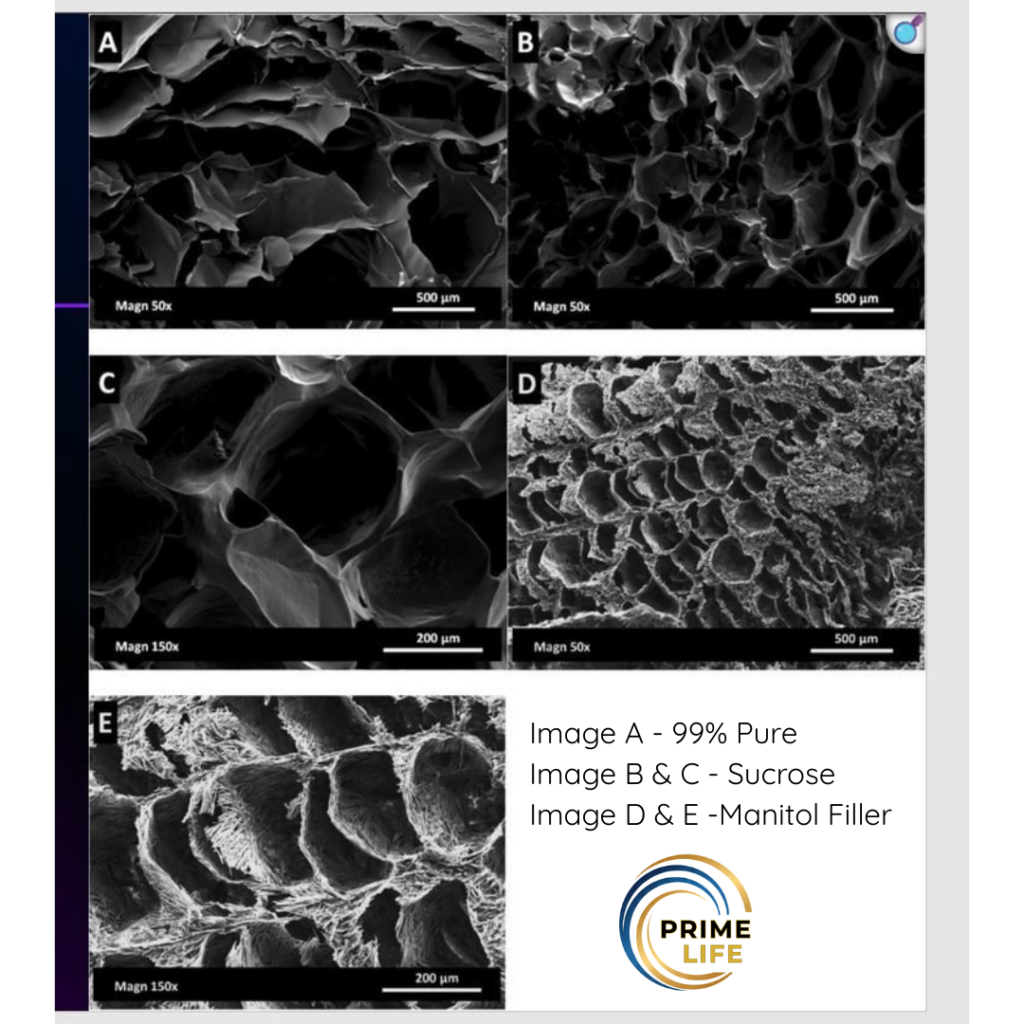
Think of Mannitol as the “packing peanuts” of the pharmaceutical world. It’s a type of sugar alcohol (similar to the stuff in sugar-free gum) that is frequently added to peptide vials during the freeze-drying process, known as lyophilization.
The “Cheap Filler”
Aany additive is a distraction. If a vial is 95% Mannitol and 5% peptide, it’s harder to verify the quality of the actual peptide. Some low-quality labs use heavy amounts of Mannitol to hide “under-dosed” products or to make a small amount of peptide look like a lot more.
Sensitivity and Redness
Some individuals experience localized irritation at the injection site. If you’ve ever had a “sting” or a lingering red bump the Mannitol might be the culprit rather than the peptide itself.
Blood Sugar & GI Issues
Because it is a sugar alcohol, extremely sensitive individuals or those following strict metabolic protocols (like deep ketosis) sometimes worry about its effect on insulin.
Stability Concerns
Mannitol can actually pull moisture toward the peptide. If the seal isn’t perfect, the Mannitol acts like a sponge, which can degrade the fragile peptide chains faster than if they were stored with a different stabilizer.
You might find a world-class lab, or you might find a “research-grade” operation that treats quality control like a casual suggestion. This is where the Canadian “Gold Standard” steps in. Think of it as the overachieving straight-A student of the industry.
The obsession with purity usually extends right down to the “packing peanuts” of the peptide world: Mannitol. Sure, this sugar alcohol helps create a pretty, shelf-stable “bulk” in the vial so it doesn’t look like you bought an empty bottle of air, but for the hardcore biohacker, it’s just uninvited guest. Between the potential for “injection-site grumpiness” (redness and stinging) and the general stigma of using cheap fillers to bulk up a tiny dose, the trend is shifting toward a “less is more” philosophy.
Ultimately, whether you’re dodging unnecessary additives or sidestepping customs-seizure-induced heart palpitations, the goal remains the same: high-fidelity biological signaling without the side of mystery sugar.